

India's largest private conglomerate is looking to integrate some of its smaller businesses with their respective flagship companies, with a view to leveraging the value of the entities and increase cost efficiency.

As the economic crisis in Sri Lanka - the world's largest exporter of orthodox tea - continues to rage across the island nation, tea producers in India look to cash in on the opportunity to seize the market. The country's largest tea growing company, McLeod Russel India, expects orders to come in from July. "A huge opportunity is coming up for everyone in India. "McLeod Russel is well placed because we have the capacity for orthodox tea," said Azam Monem, director, McLeod Russel. About 10 per cent of McLeod's production is orthodox tea.

The Starbucks partnership will take couple of years to break-even.
The parent firm and promoter firm Panatone Finvest have pledged its 10.53 per cent stake, or 30 million shares, of Tata Communications. On Tuesday's closing price of Rs 442.30, the value of the stake would be Rs 1,326.90 crore (Rs 13.26 billion). The promoters hold 76.24 per cent stake in the company.
The Tata group is strengthening the management super-structure within its group companies by extending the post of vice-chairman to three more companies - Tata Motors, Tata Steel and Tata Consultancy Services.
It has permission to use five per cent of the Assam plantations for non-tea crops, where it already grows spices and vegetables, and it is awaiting similar permission for the West Bengal plantations.
Khusrokhan has been with Tata Chemicals as its executive director. Prior to which, he was managing director at Tata Tea from 2001-04.
Tata Sons chairman Ratan Tata on Tuesday said that further investments in West Bengal would be made when there is a "feeling to satisfy that there is no hostility against us".
The Tata Group on Wednesday announced that it would set up a cancer hospital in Kolkata and make further investment in West Bengal.
Tata Coffee Ltd, owned 51 per cent by Tata Tea, plans to launch 100 coffee outlets in the country over the next five years to enhance presence.

UK-based investment bank Rothschild is advising Tata Global Beverages.
The Tata group is looking to spin off its bottled water business into a separate company.
The Tata group's investments in setting up a global institute like the cancer hospital and the Tata Motors project would be the forums for other investments in the state, said Tata.
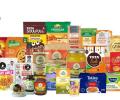
'We've maintained that India is a high-penetration game. It's not only a premiumisation game.'

The Tata group firm has enhanced its product portfolio through "targeted acquisitions" as it aspires to be a formidable player in the FMCG category, said Chandrasekaran, who is also the chairman of Tata Sons. Besides, it has stepped up the pace of innovation across markets in line with consumer trends such as health and wellness and convenience, he said in his message to shareholders in the latest annual report of TCPL.

They were asked to wait for 72 hours, but the deadline passed on Sunday and the wait seems endless.

'I think some of us, like Mukesh Ambani, myself and those of us who head industrial units, ought to really focus on what we can really do to make the world a safer place, maybe 50 or 100 years from now.' 'For instance, how can we deal with climate change and global warming, right now?' 'The effects of it may not be felt now; in fact, we may pay a price for it today, but it will help the generations to follow.'

The stock of fast-moving consumer goods major Tata Consumer Products has been reaching new all-time highs on better-than-expected results for the July-September quarter (second quarter, or Q2), strong growth in the food business, and margin gains in the beverage/international business. Most brokerages are positive on the stock, given growth prospects, and believe that rich valuations are justified. The near-term trigger has been the robust operational performance in Q2.
Tata Tea, which sold its stake in US-based Glaceau last year, plans to begin selling a low-priced bottled water in the country through its unit Mount Everest Mineral Water, to take on global rivals such as Coca-Cola and PepsiCo in the Rs 1,500-crore packaged drinking water market."We want to do it quickly,'' Pradeep Poddar, managing director and CEO, Mount Everest, said. "The market is still very young and we can evolve it further through marketing new offerings."

'Growth for some companies has been hard to come by and this is a smart way to get there.'

It was amazing to see how he used to hoodwink batsmen with subtle changes in flight, loop and deliver his doomsday ball -- the dangerous armer.

Madhu Jayanti's Rs 55-crore packet tea business so far is only in Maharashtra and Karnataka. After Eveready's tea business buyout, MJIL's tea production in India will increase from 2.4 million kg to 6.2 mkg and its income from branded tea sales will rise 53 per cent to Rs 198 crore this fiscal year itself. It will also be available in 14 states.

Arun Maira who worked for 25 years with the Tata Group, remembers his early years with Ratan Tata.

Over the past year, McLeod sold 21 gardens in India, reducing almost 32 million kg in production.

Tea estates across Assam and West Bengal, which were hitherto closed owing to the lockdown, opened in April.

With theatres remaining shut, new releases are making a beeline for OTT platforms, and companies are forging tie-ups to reach out to the target audience.
Tata Tea's exit from Glaceau, its largest acquisition so far, puts the question in context.
Objective of the examination is to study the tax implications of such deals.
With substantial cash reserves, a buoyant domestic market and increasing global opportunities, almost every consumer goods (FMCG) company is looking for acquisition targets.
Stating that the differential pricing above Rs 12 was "unfair trade practice," Justice J D Kapoor, Delhi State Consumer Disputes Redressal Commission, said: "The process of converting ordinary water into mineral water is the same (for all bottlers) and the quality or purity is also the same. It is immaterial whether mineral water is obtained directly from springs or any other source." Yet, packaged water firms continue to price their 1 litre bottles above this amount.

The industry began to upgrade its practices even before the NGO alleged Indian tea contained harmful pesticides.
Beverages giant Coca-Cola plans to acquire US energy drink firm Glaceau, in which Tata Tea has 30 per cent stake, in a deal that could be worth over $3 billion, US media reports said on Wednesday.
